Collagen gets all the glory, but it doesn’t work alone. If you’re investing in collagen support and skipping vitamin C, you’re missing the co-factor that makes the whole thing run.
Vitamin C is the spark, not a sidekick
Your body builds collagen through a series of steps, and two of the key enzymes in that process — prolyl and lysyl hydroxylase — depend on vitamin C to function. Without enough of it, those enzymes stall and collagen can’t be properly formed or stabilised. This isn’t a “nice to have”: vitamin C is essential to collagen synthesis, full stop.
Why a combined formula beats collagen alone
Lab studies show vitamin C directly stimulates collagen production in skin cells, and it doubles as an antioxidant that helps protect skin from everyday oxidative stress. Pair it with the amino acid building blocks of collagen, and you’re giving your skin both the raw materials and the tool it needs to use them. Building blocks plus the spark — that’s the combination that actually moves the needle.
How SkinFuelTM does it
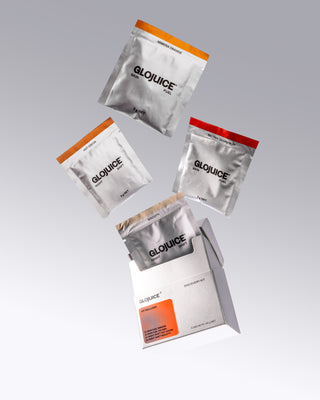
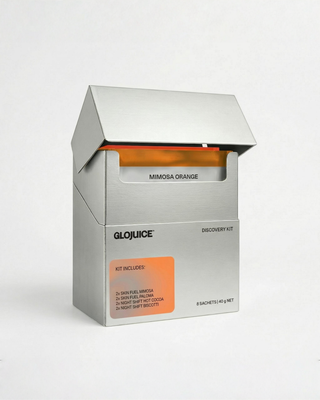
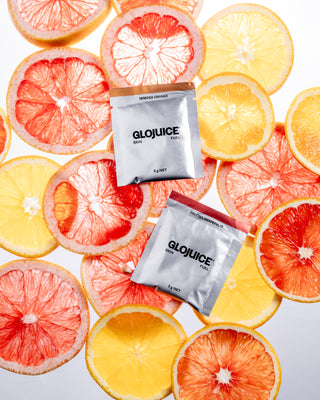
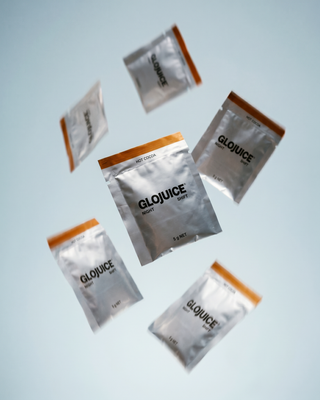
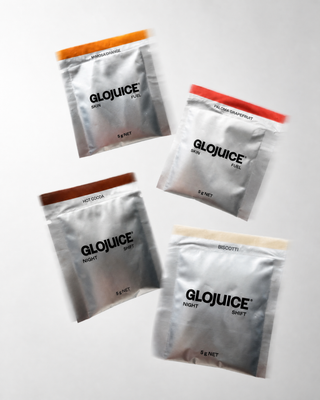
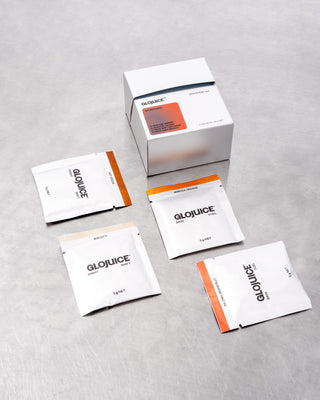
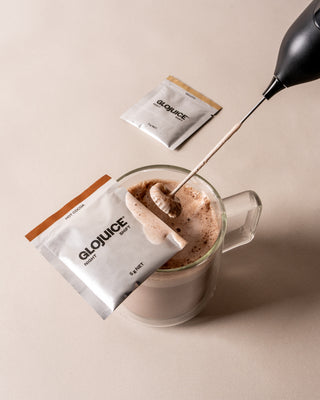
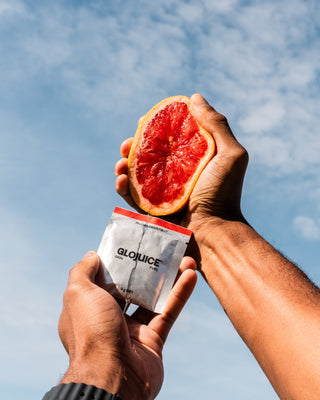
This is exactly why SkinFuel™ isn’t just collagen support on its own. Each sachet pairs a spectrum of collagen-supporting amino acids with vitamin C, zinc and hyaluronic acid — the co-factors that help your body do what it’s built to do. Everything you need, nothing you don’t. For the deeper mechanism, see
Amino Acids & Collagen Synthesis in Skin Health.
Collagen + its co-factors in one sachet - Shop SkinFuel™.
Sources
Pullar JM, Carr AC, Vissers MCM.
The Roles of Vitamin C in Skin Health.
Nutrients. 2017;9(8):866.
https://doi.org/10.3390/nu9080866
Boyera N, Galey I, Bernard BA.
Effect of vitamin C and its derivatives on collagen synthesis and cross-linking by normal human fibroblasts.
International Journal of Cosmetic Science. 1998;20(3):151–158.
DePhillipo NN, et al.
Efficacy of Vitamin C Supplementation on Collagen Synthesis and Tissue Repair.
Orthopaedic Journal of Sports Medicine. 2018;6(10):2325967118804544.